
Home
“This is going to take off like a rocket!”
– said a friend of mine when I bought my very first share in October 2000. The share really did take off… like a faulty rocket right after launch… and smashed into the ground.
My first investment was a total loss. Bought in 2000 (I had no idea we were at the end of the dotcom bubble), sold in 2011. Luckily I was working at BAWAG PSK Bank at the time and did not have to pay custody fees. After 11 years the share was written off as worthless, because the selling costs on the Canadian exchange would have been higher than what my shares were worth. Because… hope dies last.
What did I learn about the capital market at the bank?
A lot of theoretical knowledge about shares, funds, bonds and derivatives. The basics, in other words. The general stuff.
A lot of time has passed since then. In 2006 I took the first step towards my training as a trader: an academy in Budapest where I was taught the fundamentals of the capital market, technical analysis, risk management, order types and everything else that goes with it in great detail.
What do I like to remember from that training?
Our mentor gave us graph paper and a data set printed on an A4 sheet, and as homework we had to draw the candlesticks on the graph paper from that data (open, high, low and close of shares). At the time I could not understand why the teacher was torturing us like that… then, over time, I understood. The anatomy of candlestick charts was burned into our heads. A great thing that helped me a lot later on.
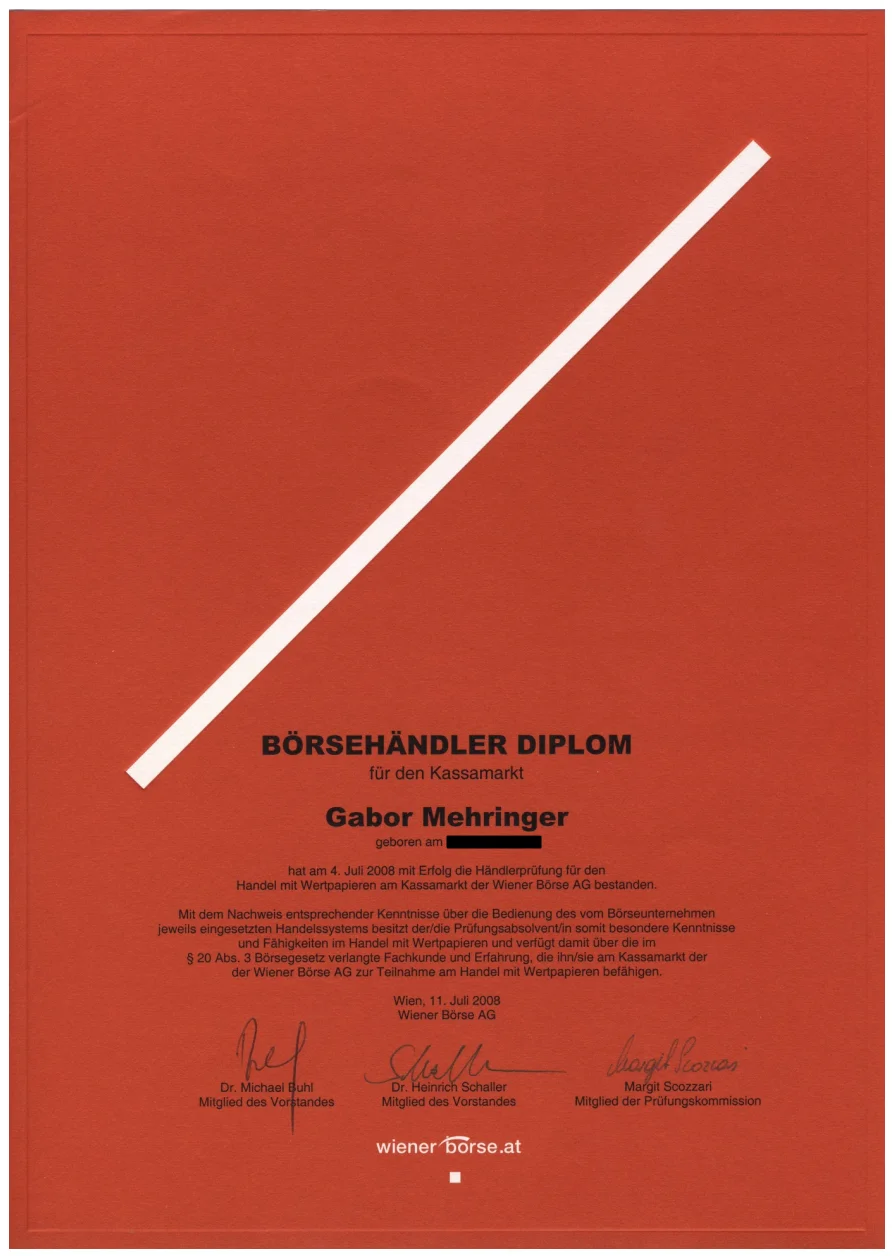
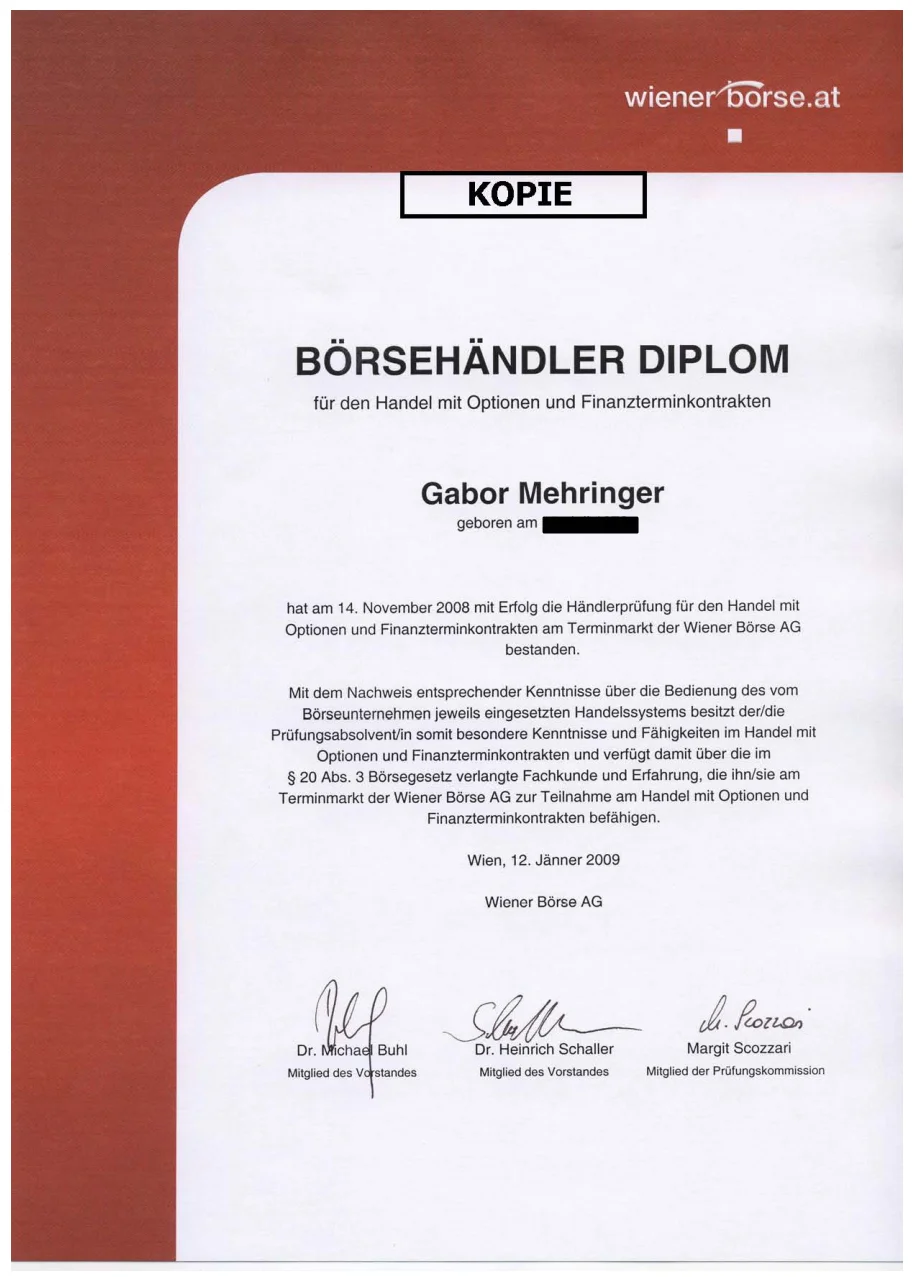
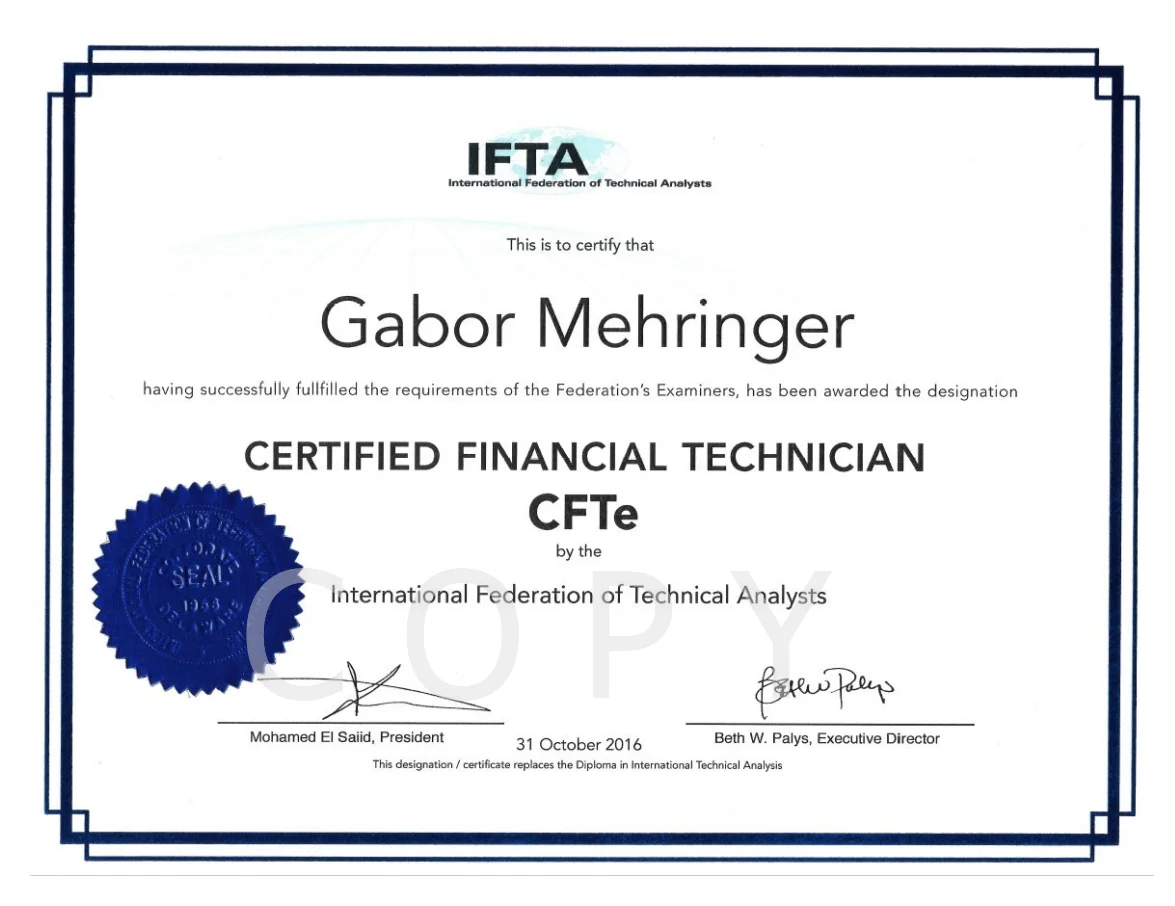
In 2008 I obtained the exchange trader licence for the cash and derivatives markets, which I later complemented with the certification as a technical analyst (CFTe).
These qualifications require you to know what you are talking about, but I can tell you one thing… they do not teach you how to trade. You become the engineer of a Formula 1 car, but that does not mean you can drive it.
From 2006 to 2010 I traded just about everything: shares, options, certificates, warrants, futures and CFDs. Without success. But it was never the market’s fault, or the broker’s, or that of the people around me. Only mine. I thought I was good… but I was not. I was miles away from professional trading.
Then, in 2010, came the light-bulb moment.
I was asked whether I could interpret the trading workshops of the European Trading Academy (trAdac) by Birger Schäfermeier in Hungary. I liked Birger’s trading approaches and market philosophy straight away. This laid the foundation for my methods of analysis: naked candlestick charts without any frills. Horizontal lines and the trend theory of Charles Henry Dow – one of the men the Dow Jones index is named after. “Learn to read the tape!” (Note: ‘tape’ here means the chart)
Later I had the opportunity to interpret the live trading room for trAdac and also to run it for the Hungarian audience. I loved it. In the market all day. With viewers watching. On a live account.
What was so special about it?
In a live trading room there is no talking your way around things. No super trades from the past that you can show viewers as a dopamine booster. Real-time trading under real conditions. How do I analyse, how do I enter, how do I manage the position and how do I exit.
I have now been in the market since 2000. There have been many ups and downs, but… once a trader, always a trader… and with passion.
Since 2012 I have been working on the broker side. For eight years I was responsible for CMC Markets’ Austrian business in Vienna, and today I look after Pepperstone’s Austrian clients. Over these 14 years I have met countless traders, beginners and professionals alike. And I have seen why most of them fail: no fixed, repeatable set-ups, no clear risk management, and a lack of discipline.
MY TRADING
”Whether you are a long-term investor or a short-term trader –
both try to estimate the probabilities of future price movements.”
“Trade what you see, not what you want to see!”
“Take care of the risk and the profit will take care of you!”
…these are my guiding principles in active trading.
My trading style is based exclusively on the analysis of supply and demand – in other words, on analysing price action with technical chart analysis. I do not take the content of fundamental data or news into account in my trading decisions, because on the one hand it is priced in by automated algorithms immediately after publication, and on the other hand nobody can know how the mass of market participants will react to news.
I do not ask myself why questions – why the price has fallen or risen. There are always explanations for price movements, but nobody knows all the interests in the market. Only the price shows whether there was more supply or more demand. In my opinion, asking “why” is merely an illusion of certainty and confirmation.
A market analyst’s job is to find and present the reasons for rising and falling prices, but a trader has to make money directly in the market, in the price movement itself. A detailed analysis of the market is of course essential for a trader too. He has to be able to assess the probabilities of the price path with his technical tools. But since nobody can forecast the market correctly all the time, strict risk management is indispensable. Before opening a position, the trader must know where he will discard his trading idea if it does not meet the conditions.
Speaking of news!
Of course a trader also has to keep an eye on the news and know when market-moving announcements could have a stronger impact on the price – so that he can close or manage his positions in time, or not open any new ones.
My trading is purely discretionary. It is not based on automated algorithms but done entirely by hand. I use tried-and-tested techniques, namely the rules of Charles Dow’s trend theory – the highs and lows in the price path, also known as market structure.
I prefer “empty” candlestick charts, i.e. price action charts. I analyse the trend and add horizontal lines to the chart.
Other tools that play an important role in my trading strategies:
I do not use indicators or oscillators in my trading, because they are generated from the price path and moving averages and reflect the past. In short-term trading, however, timing is crucial, and the most up-to-date indicator is the price itself. Sophisticated risk management rounds off my trading style.
This is exactly the knowledge I pass on, in training sessions, webinars and personal coaching. If you want to know where you stand right now, take my knowledge test.
If you have read everything up to here, I say “Wow! Thank you for your time!”
Best wishes
Gabor Mehringer
E-mail: trading@gabormehringer.com